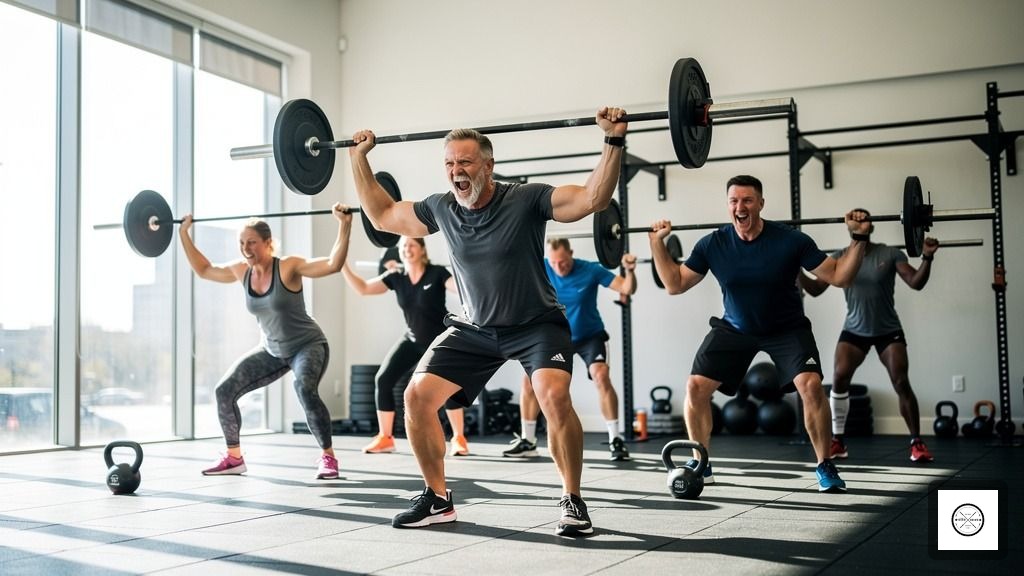
Richmond’s over-40 crowd is walking into CrossFit gyms in bigger numbers than ever, many of them former recreational runners or badminton players who discovered their knees and shoulders need a different approach once they cross that decade mark. A poorly scaled workout at 42 doesn’t just leave you sore — it can sideline a shoulder or lower back for six to eight weeks, which is a much bigger cost than any missed personal record.
This isn’t a general fitness article about CrossFit basics. It’s specifically about how coaching, scaling, and recovery need to shift once an athlete is training past 40 — and what that looks like inside a Richmond gym in 2026.
The biggest mistake masters athletes make isn’t lifting too heavy — it’s skipping the warm-up ramp entirely and jumping straight into working weight. A 40+ joint needs 8–10 minutes of graded movement prep before the first working set, not the 3-minute jog most beginners default to. Ask your coach to build a specific warm-up progression into your program rather than treating it as optional.
Why Scaling Isn’t the Same as Going
Scaling a workout means adjusting load, range of motion, or movement complexity so the stimulus still challenges the athlete without exceeding what their joints and connective tissue can currently handle. For someone over 40, this usually means modifying volume and load progression rather than simply choosing lighter dumbbells across the board.
The confusion comes from assuming scaling equals doing less work. In practice, a well-scaled workout for a 45-year-old can be just as metabolically demanding as the prescribed version — the difference is in movement selection, not effort. A box jump might become a step-up. A barbell snatch might become a dumbbell version with a controlled tempo. The heart rate still climbs. The muscles still work. But the joints aren’t absorbing forces they’re not ready for.
What Changes in the Body After 40
Tendons and ligaments lose some elasticity with age, and recovery between hard sessions typically takes longer — often 48 to 72 hours instead of 24. This doesn’t mean masters athletes can’t train at high intensity. It means the programming around that intensity needs more thought.
Grip strength, shoulder mobility, and hip flexibility are the three areas coaches at crossfit classes in Richmond, BC watch most closely with masters athletes. Overhead positions in particular — snatches, jerks, handstand work — expose old shoulder injuries that runners and desk workers have been quietly managing for years without realizing it.
Bone density is another factor rarely discussed outside a physiotherapy clinic. Weight-bearing strength work is one of the better tools for maintaining bone density after 40, particularly for women navigating perimenopause, but the loading needs to be progressive rather than maximal from day one.
Building a Program That Respects the Body
A smart masters program at Overdrive Athletic Club typically layers three things: a longer, joint-specific warm-up, load caps based on movement quality rather than ego, and built-in deload weeks every four to six weeks. This isn’t a rigid formula — it depends on training history, injury background, and how the athlete responds week to week.
Some Richmond members over 40 come in with zero barbell experience. Others were competitive athletes in their 20s and are returning after a decade off. Both need scaling, but for completely different reasons — one is building capacity from scratch, the other is rebuilding movement patterns their body has forgotten.

For athletes who want more individualized attention than a group class allows, personal training in Richmond, BC gives a coach the chance to build a program around a specific injury history or goal — whether that’s a first pull-up at 44 or returning to deadlifting after a herniated disc.
Common Scaling Options by Movement
| Prescribed Movement | Common 40+ Scale | Why It Works |
|---|---|---|
| Barbell snatch | Dumbbell snatch or hang power snatch | Reduces shoulder overhead strain while keeping the power output |
| Box jumps (24″) | Step-ups or lower box height | Removes high-impact landing forces on knees and ankles |
| Kipping pull-ups | Ring rows or banded strict pull-ups | Protects shoulder capsule while building real pulling strength |
| Heavy back squats | Front squats or tempo squats at reduced load | Keeps torso more upright, lowering lower back shear stress |
| Double-unders | Single-unders or shorter interval sets | Reduces calf and Achilles overuse from repetitive impact |
When to Bring in Physiotherapy Support
Not every ache needs a physiotherapist, but persistent joint pain that doesn’t settle within a week of reduced training volume usually does. Physiotherapy and rehab in Richmond, BC support — provided by professionals regulated by the College of Physical Therapists of BC (CPTBC) — can help identify whether a shoulder issue is a mobility restriction, a strength imbalance, or something that needs a longer break from loading.
Coaches at Overdrive Athletic Club aren’t physiotherapists and don’t diagnose injuries. What they can do is flag movement patterns that look off and recommend a referral before a minor issue becomes a training-ending one.
Nutrition and Recovery After 40
Recovery capacity changes with age, and so does the body’s response to protein intake, sleep debt, and training frequency. Muscle protein synthesis becomes less efficient with age, meaning consistent protein intake across the day — not just after a workout — becomes more important for masters athletes trying to maintain lean mass.
This is one area where general advice falls short, because someone training three days a week looks very different nutritionally from someone training six. Nutrition coaching in Richmond, BC can help build an eating pattern around actual training load rather than generic macros pulled from an app.
Getting Started Without Overcommitting
Many Richmond athletes over 40 want to test the waters before committing to a full membership, and that’s a reasonable approach. Drop-in classes let a new or returning athlete try a session without signing on for months, which matters when you’re not yet sure how your body will respond to structured strength work.
Once someone finds their footing, most move toward a regular schedule — typically two to three sessions a week is a realistic starting cadence for a 40+ athlete rebuilding capacity, though this varies based on recovery and outside stressors like work and family.
Full details on membership tiers and drop-in rates are available on the membership pricing page, and some members use HSA/FSA accounts to offset part of the cost where their plan allows it.
What Makes Richmond’s Masters Community Different
Richmond’s demographic skew toward long-established professional and multigenerational households means a good number of members over 40 are training alongside parents, siblings, or coworkers — creating an accountability structure that’s harder to build in a big-box gym. This community element, combined with coaching that actually understands aging joints, is part of why Overdrive Athletic Club sees steady growth in its masters class attendance.
Training over 40 isn’t about chasing the fitness you had at 25. It’s about building strength, mobility, and conditioning that supports the next several decades — without the setbacks that come from ignoring what the body is telling you.
If you’re over 40 and wondering whether CrossFit still makes sense for you, the answer is almost always yes — with the right scaling. Contact Overdrive Athletic Club to book a free intro session and talk through your training history with a coach before your first class.
Do I need any certification or medical clearance to start CrossFit over 40 in Richmond, BC?
There’s no government requirement to get medical clearance before starting CrossFit in BC, though anyone with an existing heart condition, joint replacement, or recent surgery should check with their doctor first. Overdrive Athletic Club coaches, who hold CrossFit Level 1/2 certification, will also complete a movement screen during your intro session to flag anything that needs modified programming.
How much does CrossFit cost for someone starting over 40 in Richmond, BC?
Drop-in classes typically run around 30–35 CAD per session, giving new members a low-commitment way to try scaled programming before joining. Full membership pricing depends on the tier and frequency chosen, and current rates are available through the membership pricing page or by contacting the gym directly.
How does scaling actually work in a CrossFit class for older athletes?
Coaches adjust the movement, load, or range of motion of each exercise so the workout still challenges the athlete without exceeding what their joints and connective tissue can currently handle — a box jump might become a step-up, for example, or a barbell snatch might become a dumbbell version. This keeps the intensity and heart-rate response similar to the prescribed workout while reducing impact and injury risk.
When should someone over 40 see a physiotherapist instead of just modifying their training?
If joint pain persists for more than a week despite reduced training volume, or if a specific movement consistently triggers sharp pain rather than general soreness, it’s worth booking a physiotherapy assessment. Physiotherapists regulated by the College of Physical Therapists of BC (CPTBC) can determine whether the issue is a mobility restriction, strength imbalance, or something requiring a longer break from loading.
Last updated: 20 July 2026