At Overdrive Athletic Club, we see that hesitation all the time. But we’re here to let you in on a secret: the vast majority of people practicing Olympic lifts in our gym have no intention of ever competing. They’re using these movements as one of the most effective tools available for building total-body strength, power, and coordination for everyday life.
The Real Goal: Building a More Capable Body
When you strip away the competitive aspect, Olympic weightlifting is simply about moving a weight from the ground to overhead as efficiently as possible. To do this requires a unique combination of skills that are incredibly beneficial for general fitness:
- Power: This is strength applied at speed. It’s the quality that helps you jump higher, sprint faster, and react quicker. It’s also what you use to hoist a heavy suitcase into an overhead bin or lift a toddler off the ground in a hurry.
- Coordination & Balance: The lifts force your entire body to work as a single, synchronized unit. This neurological training improves your balance and proprioception (your sense of where your body is in space), reducing the risk of falls and making you more agile.
- Mobility & Flexibility: To perform a snatch or clean safely, you need good mobility in your ankles, hips, and shoulders. Our training programs don’t just demand this mobility; they actively build it through targeted warm-ups and the practice of the lifts themselves.
Forget about the massive weights you see on TV. For 99% of us, the goal is to master the movement and build a more athletic, resilient body. The weight on the bar is just a way to measure progress.
What a Beginner Olympic Lifting Session Actually Looks Like
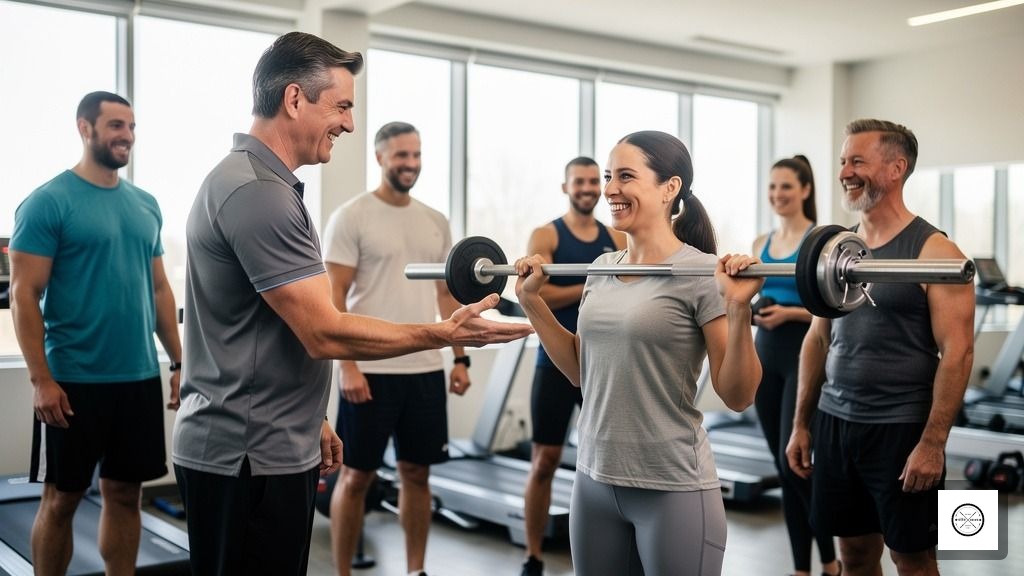
Walking into your first session can be intimidating, so let’s demystify it. You won’t be asked to rip a heavy barbell off the floor. We prioritize safety with dedicated lifting platforms, bumper plates for safe drops, and a low coach-to-student ratio to ensure everyone gets personalized attention. Your first few weeks, and sometimes months, are all about learning the language of the movement safely.
A typical beginner-focused class at our Richmond gym follows a clear structure:
- The Warm-Up: This is crucial. We spend significant time on dynamic stretches and mobility drills specifically for the hips, shoulders, thoracic spine (your upper back), and ankles. We need to prepare your joints and muscles for the specific positions the lifts require.
- Skill Work with a PVC Pipe: This is where the magic happens. You’ll grab a light PVC pipe and a coach will break down a lift—say, the snatch—into small, digestible pieces. You’ll practice the “first pull” (from the floor to the knee), the “second pull” (the explosive hip extension), and the “catch” (receiving the bar overhead in a squat). You’ll repeat these drills until the pattern starts to feel natural.
- Empty Barbell Practice: Once you show proficiency with the pipe, you’ll graduate to an empty barbell (15-20kg). The focus remains exactly the same: perfect technique. A coach will be right there, providing cues like “keep the bar close” or “finish your pull.”
- Adding Weight (Eventually): Only when your form is consistent and safe will a coach suggest adding a small amount of weight. This is the final step, not the first.
The entire session is a lesson in motor control, not a test of brute strength.
Your Progression: From PVC Pipe to Confident Lifter
Learning the Olympic lifts is a journey, not a race. It requires patience, but the payoff in physical competence is enormous. While everyone’s timeline is different, a typical progression looks something like this:
| Phase | What to Expect |
|---|---|
| Phase 1: Foundations | 1-4 Weeks: Learning positions and drills with a PVC pipe. The focus is purely on motor patterns. |
| Phase 2: Empty Barbell Technique | 1-2 Months: Transferring the patterns to an empty barbell. Building consistency and control is the only goal. |
| Phase 3: Adding Light Weight | 2-6 Months: Once technique is solid, you’ll begin adding small amounts of weight to challenge your form and build strength in the movement. |
| Phase 4: Building Strength & Consistency | 6+ Months: You are now comfortable with the lifts and are focused on progressively getting stronger while maintaining excellent technique. |
This process can’t be rushed. For those who want to accelerate their learning curve or need to work on specific mobility issues, dedicated one-on-one coaching can be invaluable. Our Personal Training in Richmond, BC programs allow a coach to give you their undivided attention, breaking down the movements to suit your unique body and goals.
How Olympic Lifting Fits Into Your Overall Fitness
At Overdrive, Olympic lifting isn’t a separate, isolated program. It’s a fundamental part of what makes our members so athletic. These movements are frequently programmed into our CrossFit Classes in Richmond, BC because they deliver an incredible return on investment, building strength, power, and coordination all at once.
By integrating these lifts into a well-rounded program that also includes traditional strength work, gymnastics, and cardiovascular conditioning, we create truly well-rounded athletes. You’re not just a weightlifter; you’re a more capable human being.
For example, one of our members, a local teacher in their 40s, started with a PVC pipe, struggling with shoulder mobility. Six months later, they are confidently clean and jerking a weight they never thought possible, and more importantly, they’ve eliminated the chronic back pain they used to feel from a day of standing in the classroom.
Ready to Build Your Power?
The snatch and clean and jerk are not out of your reach. They are learnable skills that can transform your fitness, confidence, and physical ability, regardless of your starting point. With expert coaching and a focus on technique over ego, you can safely learn these incredible movements. Our coaches hold certifications including USA Weightlifting Level 1 and are experienced CrossFit trainers, ensuring you learn safely and effectively.
If you’re ready to see what you’re truly capable of, book a free trial session to experience our coaching firsthand. Contact us for current class pricing and membership options. You can reach Overdrive Athletic Club today at (778) 909-7257 to learn more about our approach to fitness in Richmond.
Do I need to be strong to start Olympic weightlifting?
No. In fact, it’s the other way around: you do Olympic weightlifting to get strong. Beginner classes focus entirely on learning the technique with a very light PVC pipe or an empty barbell. Strength is a result of good technique, not a prerequisite to start learning.
Is Olympic weightlifting safe for beginners?
Yes, when taught correctly by a qualified coach. Safety is the number one priority. A good program will progress you very slowly, ensuring you master each position and movement before adding any significant weight. The risk of injury is very low in a properly coached environment.
How is Olympic lifting different from powerlifting?
Powerlifting focuses on maximal strength in three slow, controlled lifts: the squat, bench press, and deadlift. Olympic weightlifting focuses on explosive power and speed in two dynamic lifts: the snatch and the clean and jerk. While both build strength, Olympic lifting places a much higher demand on mobility, coordination, and speed.
How often should I practice the Olympic lifts?
For general fitness, incorporating them into your routine 1-3 times per week is highly effective. Because they are neurologically demanding, quality of practice is far more important than quantity. A focused session working on technique will yield better results than multiple sloppy sessions.
Last updated: 3 August 2026